Purposeful sample目的性抽样
Four master’s students with varied state, religious, gender, and sexual-identity backgrounds.四名来自不同州、宗教、性别与性取向背景的硕士生。
A retrospective interview study examining how fragmented sex education continues to shape emotion, values, and agency in adulthood.通过回溯访谈,研究碎片化性教育如何持续塑造成年后的情绪、价值判断与主体性。

The study examined how UPenn GSE students remember their early sex-education experiences and which moments they continue to interpret as significant in adulthood. It was designed in response to a fragmented U.S. landscape in which content, standards, and instructional approaches vary substantially across states and school systems. 这项研究关注宾大教育学院学生如何回忆早期性教育,以及哪些经验在成年后仍被他们视为重要。研究回应的是美国性教育高度碎片化的现状:不同州、学区与学校在内容、标准与教学方式上存在显著差异。
How do early sex-education experiences continue to shape emotion, values, relationships, and agency?早期性教育如何持续塑造一个人的情绪、价值观、关系理解与主体性?
Rather than evaluate whether participants remembered correct information, I treated memory itself as educational evidence: what was avoided, how messages felt, who was allowed to speak, and what participants later had to learn on their own. 研究并不以参与者是否记得“正确知识”为主要判断,而是把记忆本身视作教育证据:什么被回避,信息带来怎样的感受,谁能够发言,以及参与者后来必须独自补上什么。
Four master’s students with varied state, religious, gender, and sexual-identity backgrounds.四名来自不同州、宗教、性别与性取向背景的硕士生。
Questions on early memories, emotion, family and culture, adult impact, and imagined alternatives.围绕早期记忆、情绪、家庭与文化、成年影响及理想性教育展开。
One-to-one, approximately 20 minutes, recorded with consent in a private study room.一对一进行,每次约20分钟,在私密空间中经同意录音。
Manual transcript review, inductive and deductive coding, cross-case comparison, and theme refinement.人工校对转录,结合归纳与演绎编码,跨案例比较并提炼主题。
Five memos documented positionality, assumptions, emerging interpretations, and potential bias.五份备忘录记录研究者立场、假设、解释变化与潜在偏见。
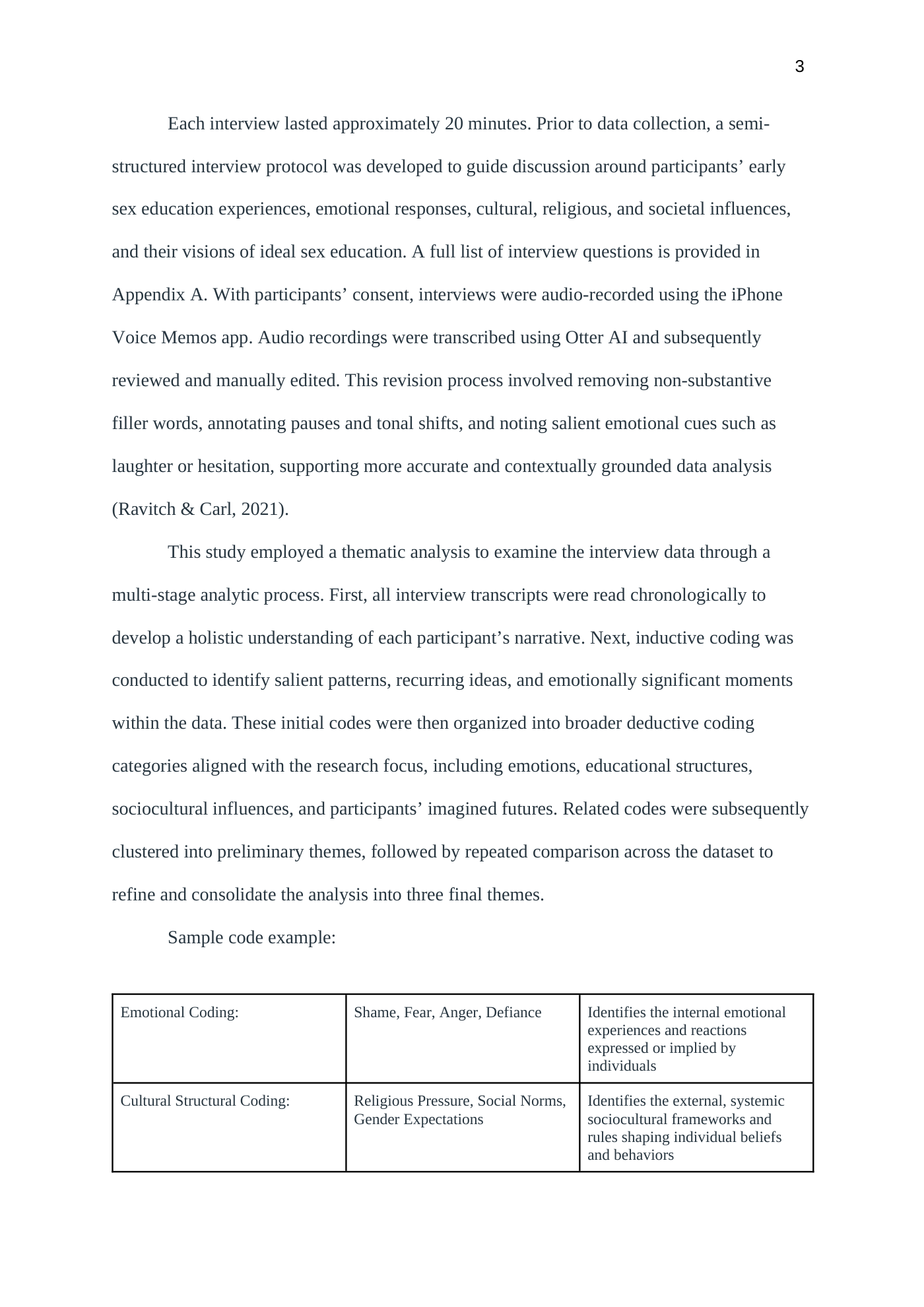
Discontinuous or abstinence-oriented instruction did not simply leave information gaps. Participants described emotional consequences that endured into adulthood, while resistance often reflected distrust in educational authority rather than simple noncompliance.不连续或禁欲导向的教学不只是留下知识缺口,也带来延续至成年的情绪后果。参与者的反抗往往并非单纯“不听话”,而是对教育权威失去信任后的回应。
Religion, family discourse, gender, politics, and local culture shaped what could be spoken and felt. Participants were not passive recipients; they negotiated, resisted, and reinterpreted these messages over time.宗教、家庭话语、性别、政治与地方文化共同决定什么可以被谈论、被感受。参与者并非被动接受者,而是在时间中不断协商、抵抗与重新解释。
Participants emphasized curiosity, practical decision-making, bodily knowledge, communication, boundaries, material access, and shame-free dialogue rather than moral control.参与者强调好奇、实际决策、身体知识、沟通、边界、物质资源与去羞耻对话,而不是道德控制。
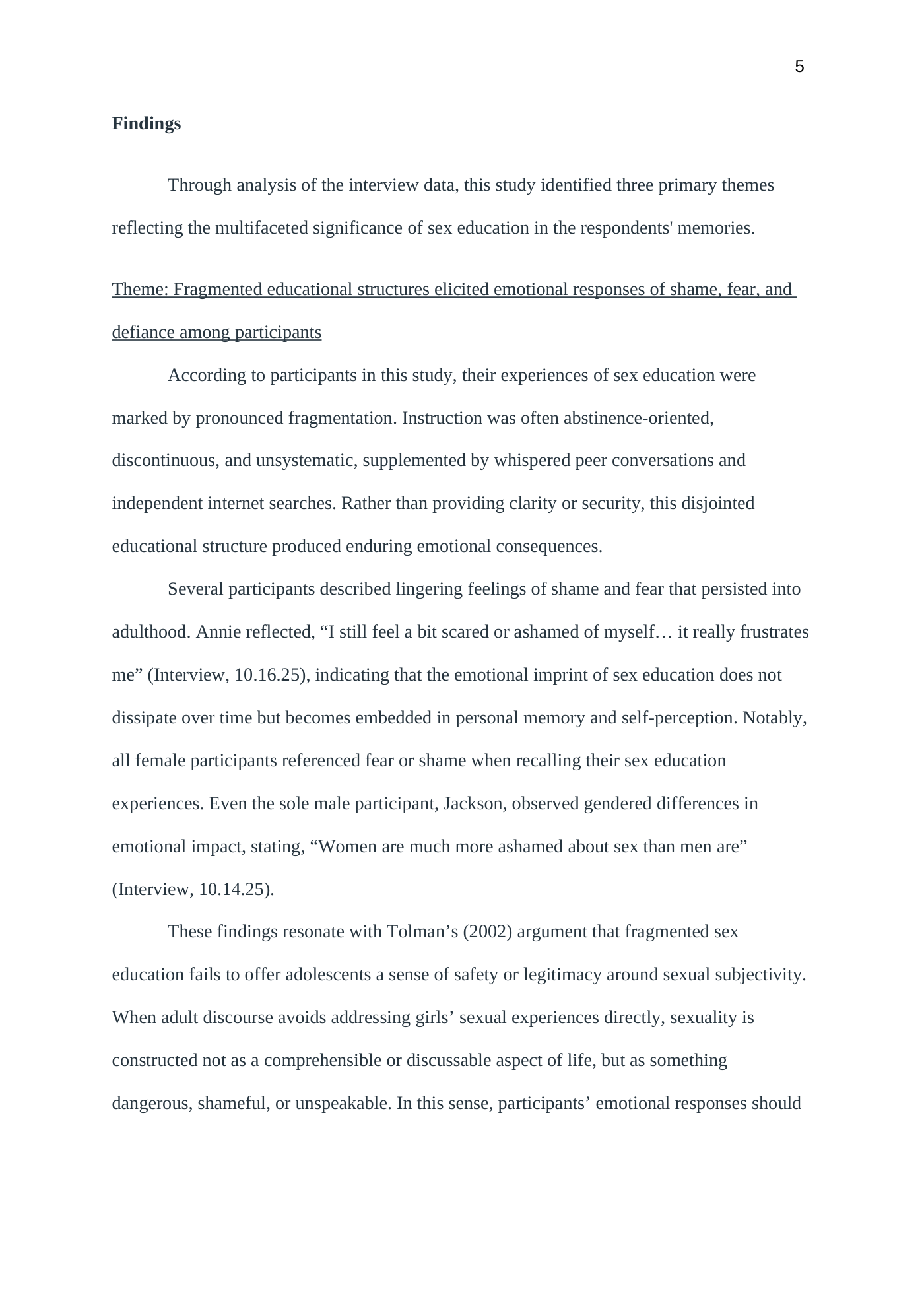
Participants received an opening script, voluntary participation and withdrawal were stated, recordings required consent, and pseudonyms were used.访谈明确说明自愿参与与退出权,录音需经同意,研究中使用化名保护身份。
As a heterosexual woman, I needed to guard against overlooking male vulnerability or simplifying LGBTQ+ experiences through my own frame.作为异性恋女性,我需要警惕忽略男性在父权结构中的脆弱,也避免用自身框架简化LGBTQ+经验。
The study challenged my assumption that standardized medical accuracy alone defines good education; power, culture, consent, and language also shape how knowledge is lived.研究促使我反思:标准化医学准确性并不能单独定义好的性教育,权力、文化、同意与语言同样决定知识如何被生活化。
The study does not claim representation. Each narrative is situated, and the sample is too small for generalization.研究不声称代表更大人群。每段叙事都有具体情境,样本规模也不足以进行普遍化。
The findings suggest that sex education should be understood as a long-term formative practice rather than a discrete health lesson. It positions learners in relation to knowledge, authority, curiosity, bodily autonomy, and the right to speak. 研究提示我们:性教育应被理解为长期的形成性实践,而不是一次孤立的健康课程。它不断安排学习者与知识、权威、好奇、身体自主及发言权之间的关系。
The study’s small sample, self-selection, retrospective memory, and short interview length limit its claims. A future study should include broader age, racial, cultural, gender, and educational backgrounds, use longer interviews or repeated conversations, and examine how empowerment-oriented practices operate within real institutions. 小样本、自愿参与、回溯记忆与较短访谈时间都限制了研究结论。未来研究应纳入更广泛的年龄、种族、文化、性别与教育背景,开展更长或多轮访谈,并观察赋权导向实践如何在真实制度中运作。