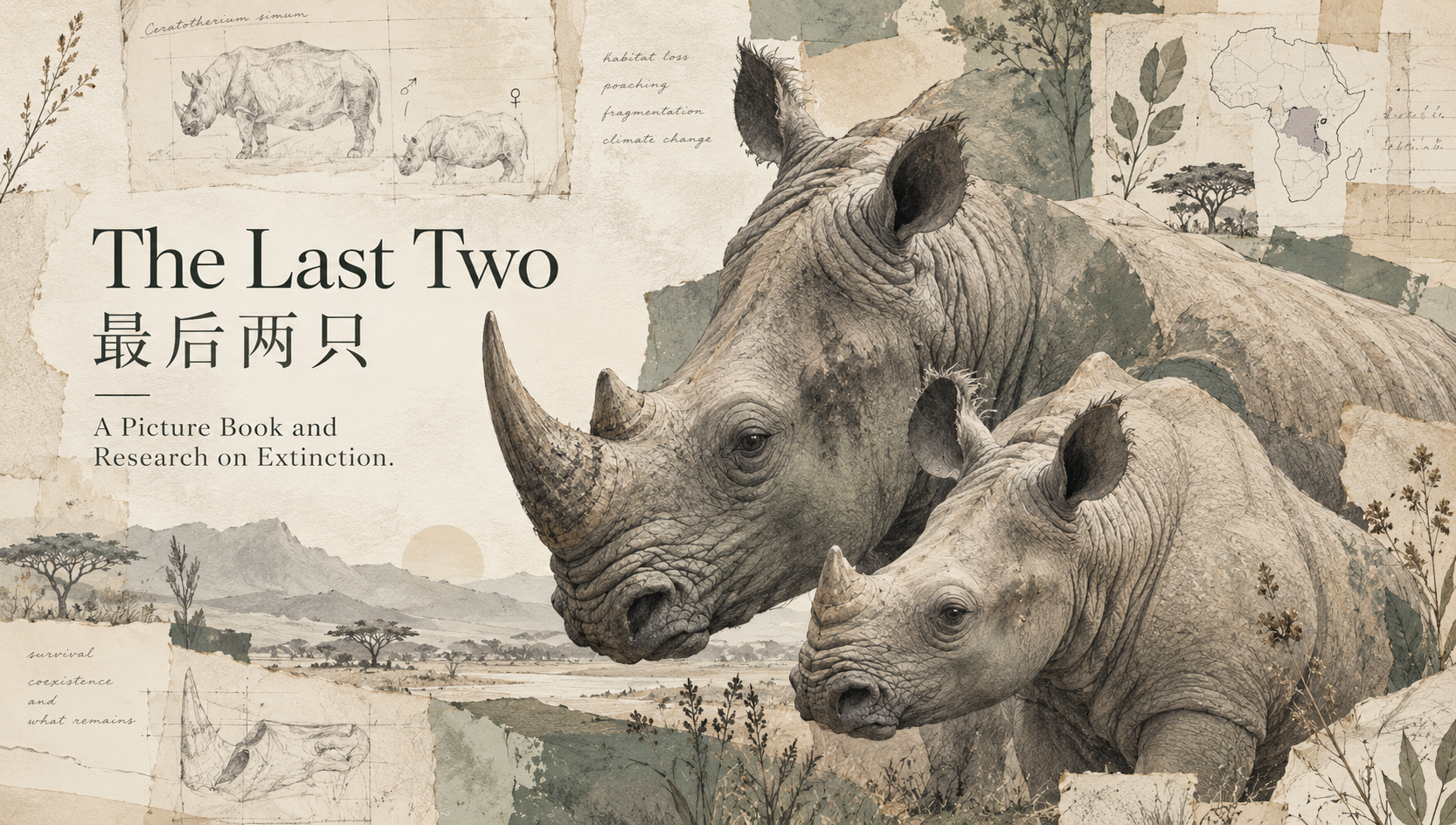
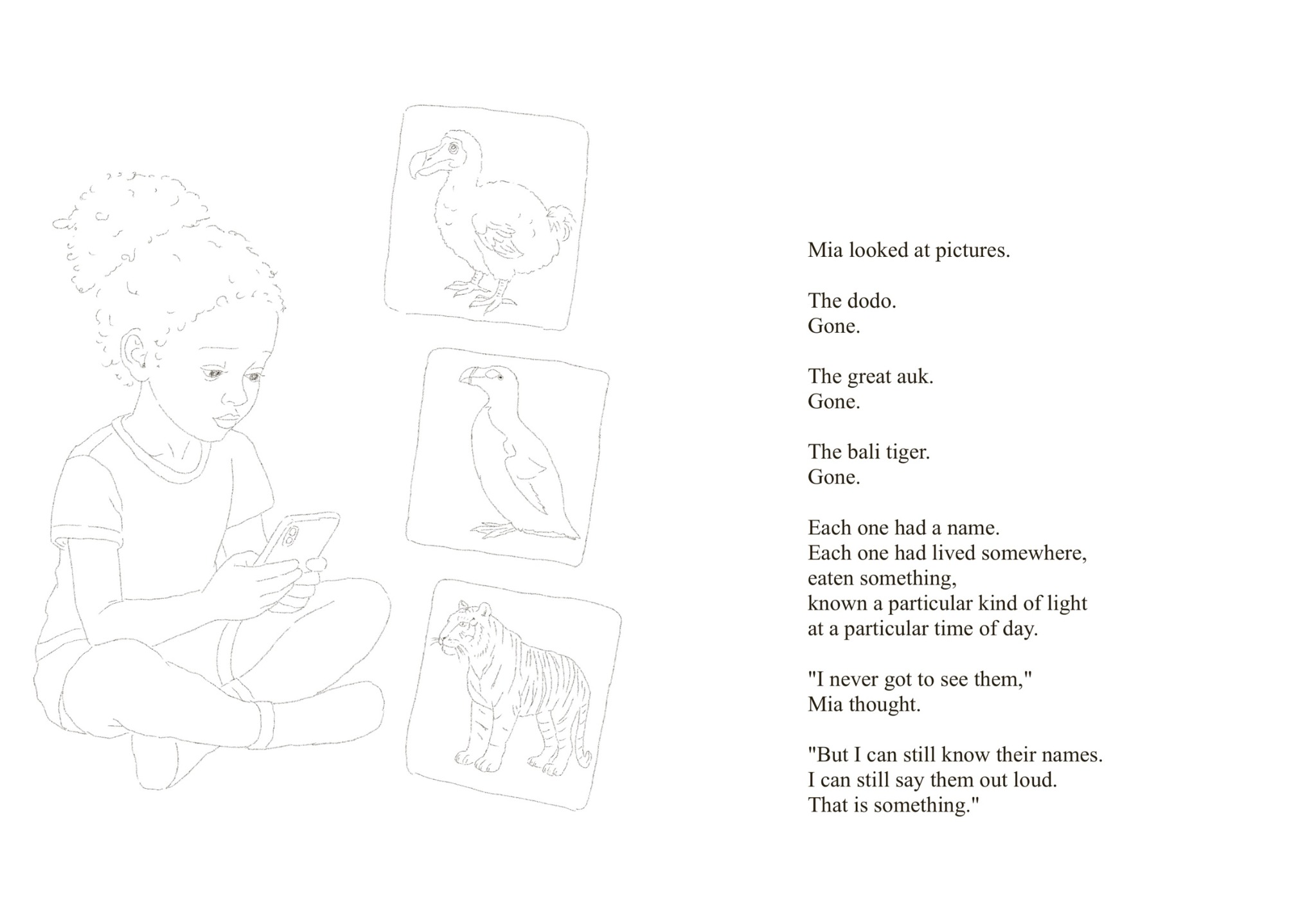
The project began with a concern about the way extinction is often narrated to children: one villain, one final victim, one dramatic ending. That structure is memorable, but it can hide the slower and more difficult reality that extinction is ecological, geological, and relational.
项目起点是我对一种常见灭绝叙事的疑问:一个反派、一个最后的受害者、一个戏剧性的终点。这种结构很容易记住,却可能遮蔽更缓慢、更难理解的现实——灭绝是生态的、地质的,也是关系性的。
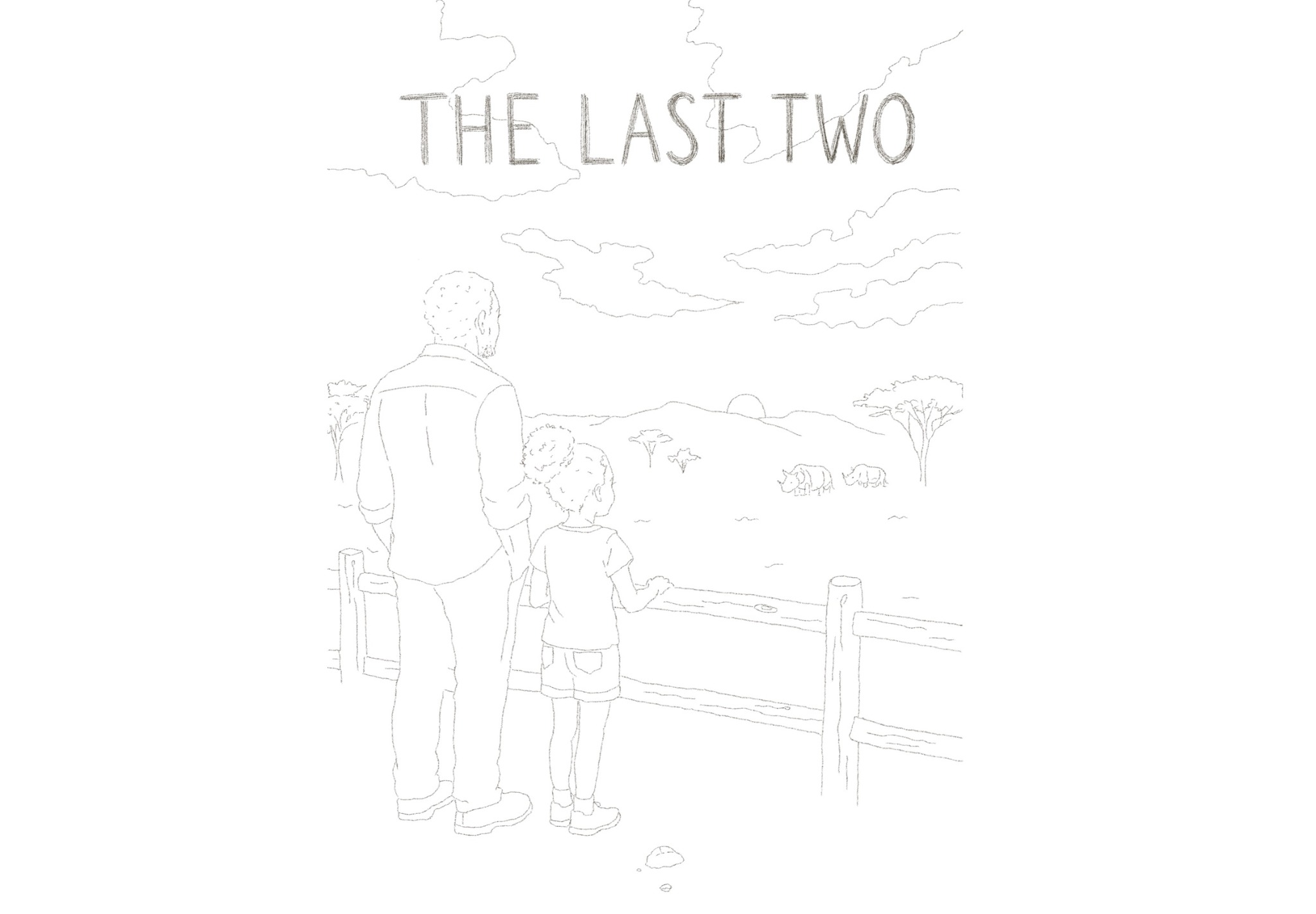
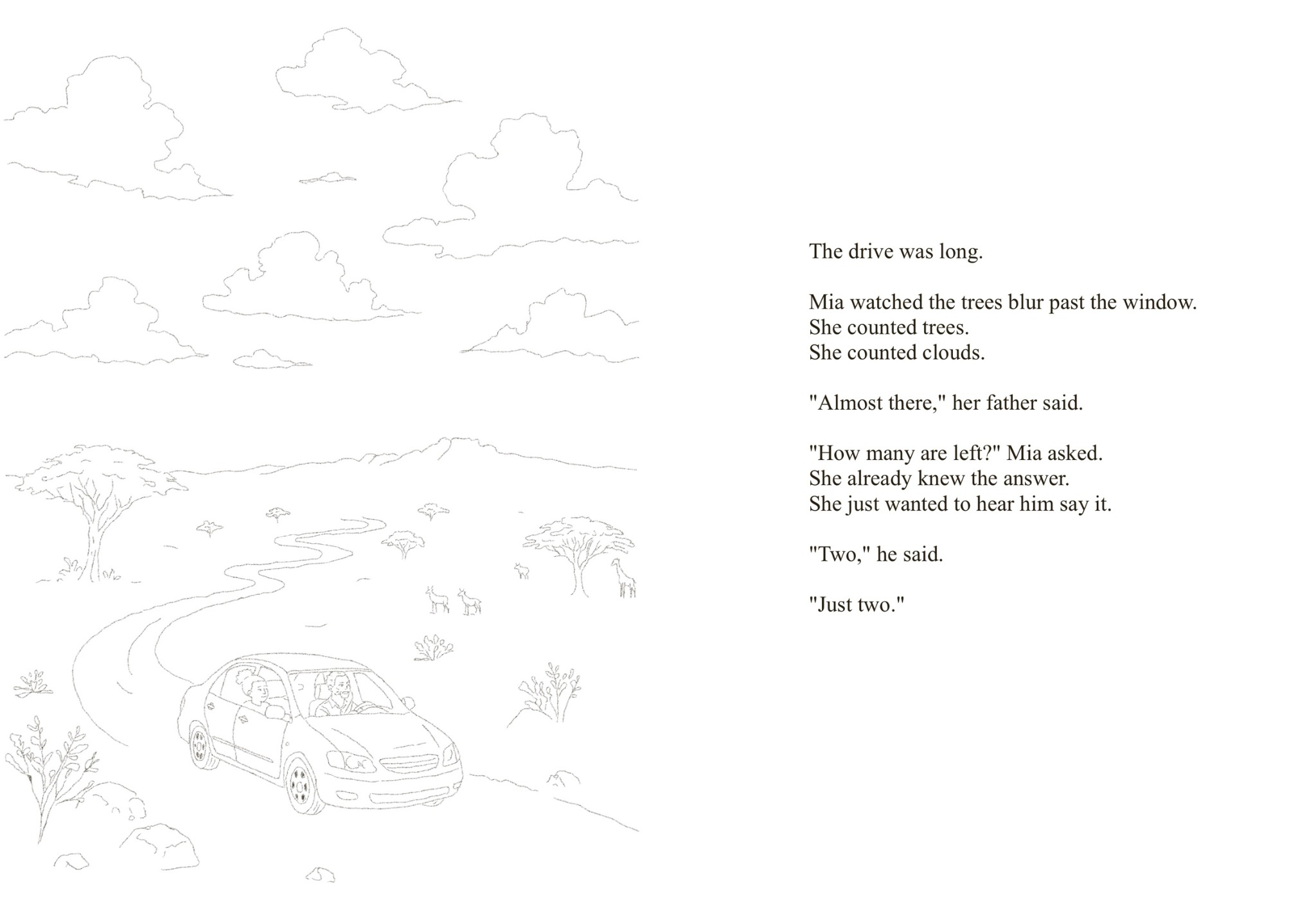
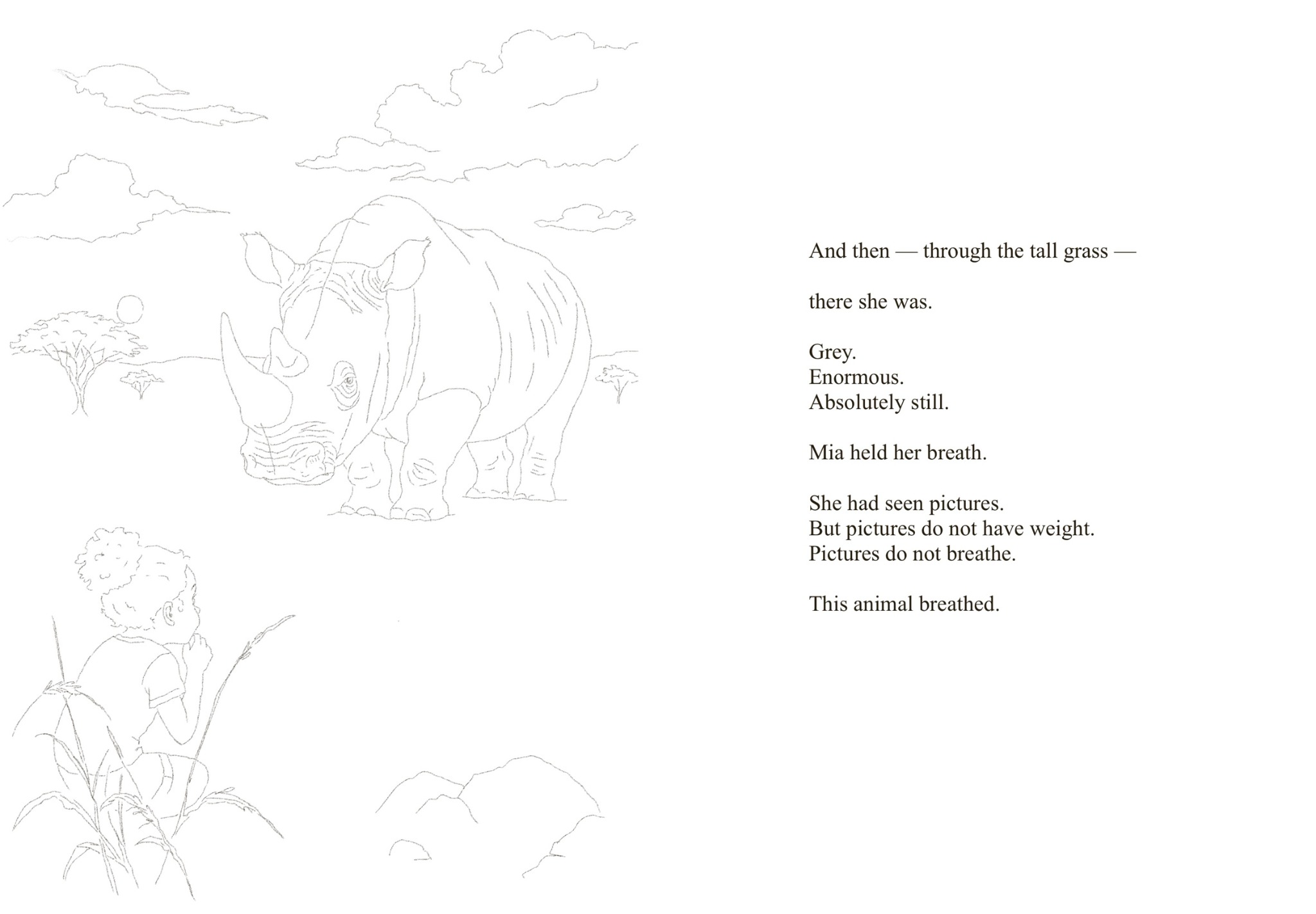
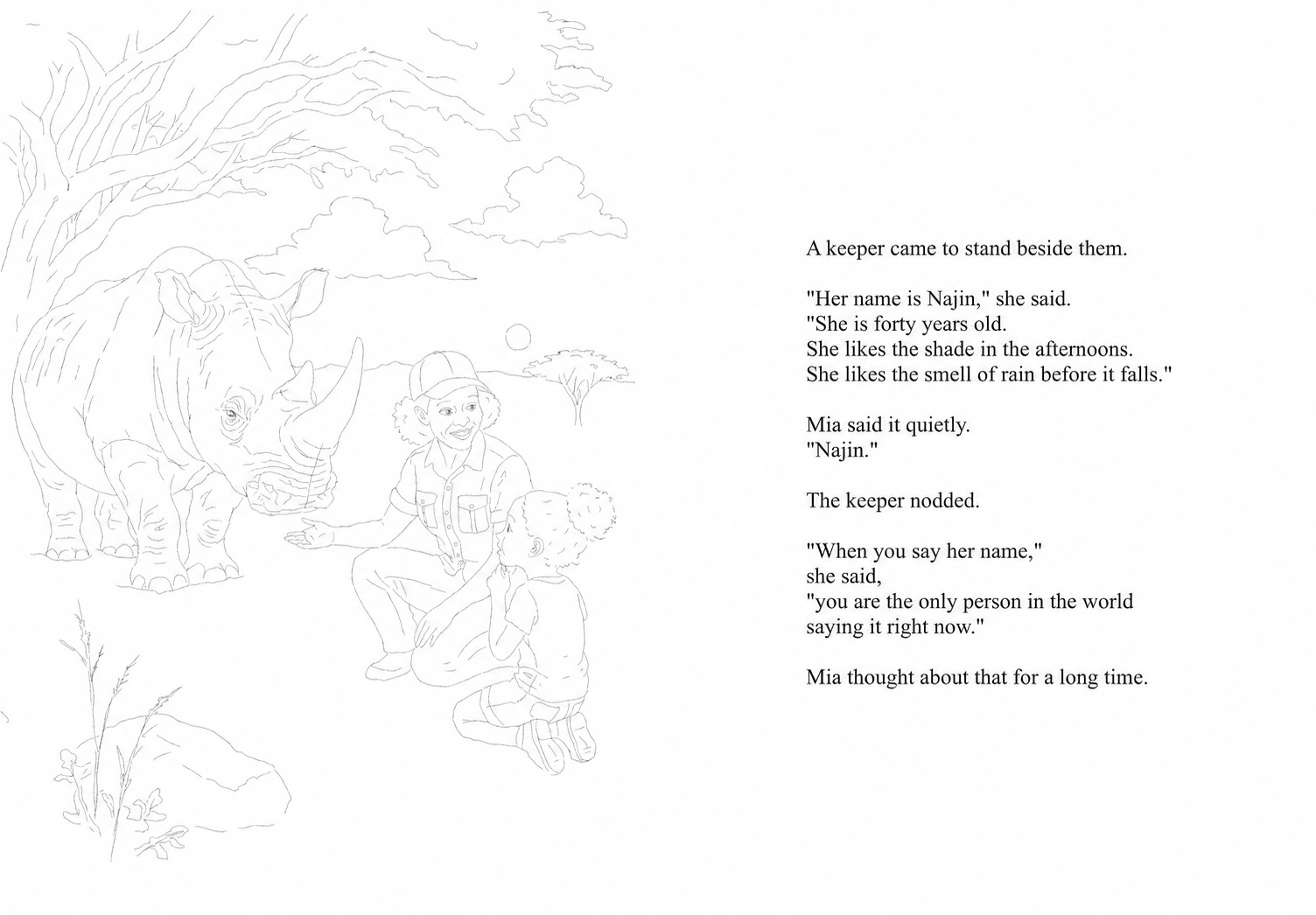
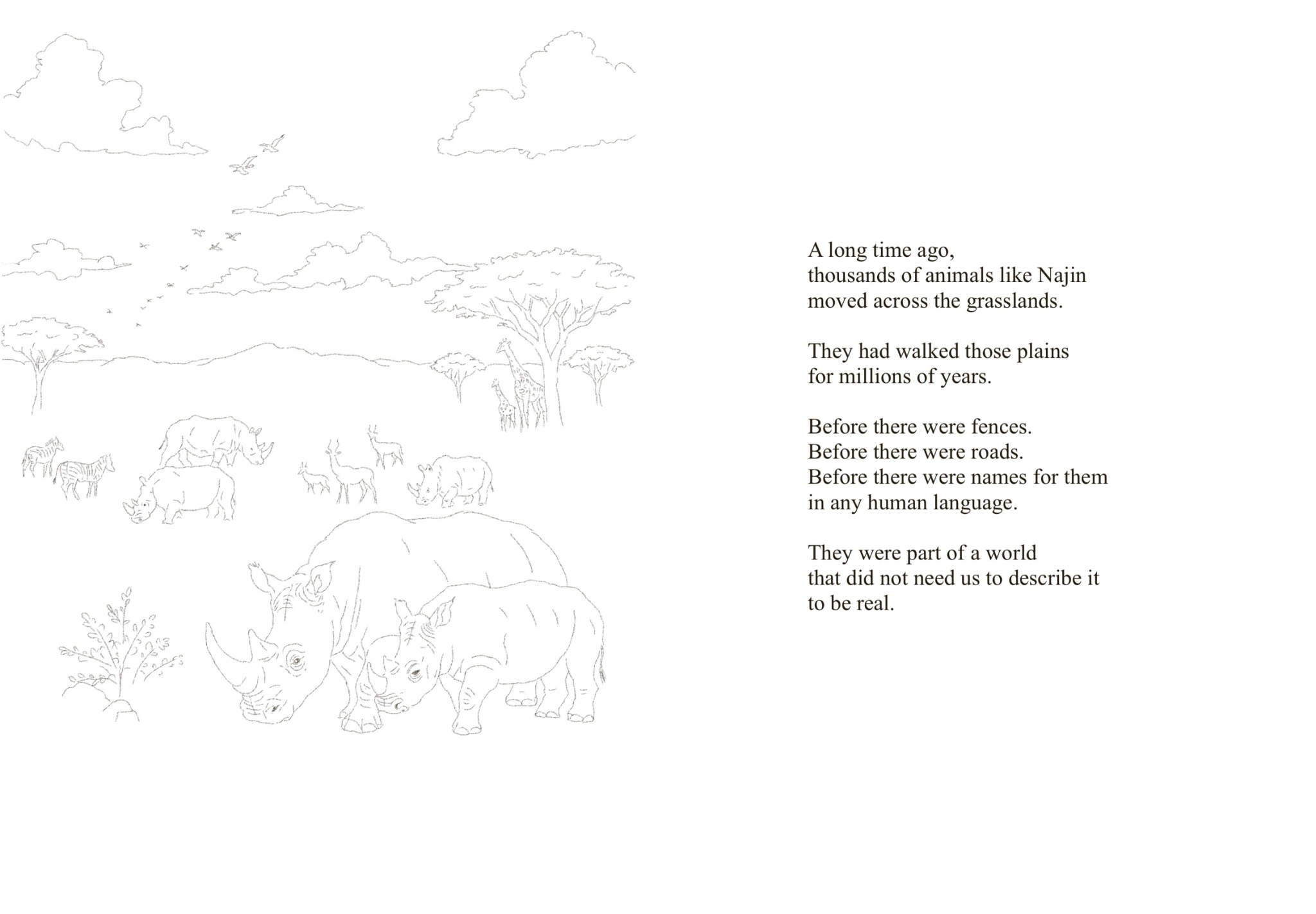
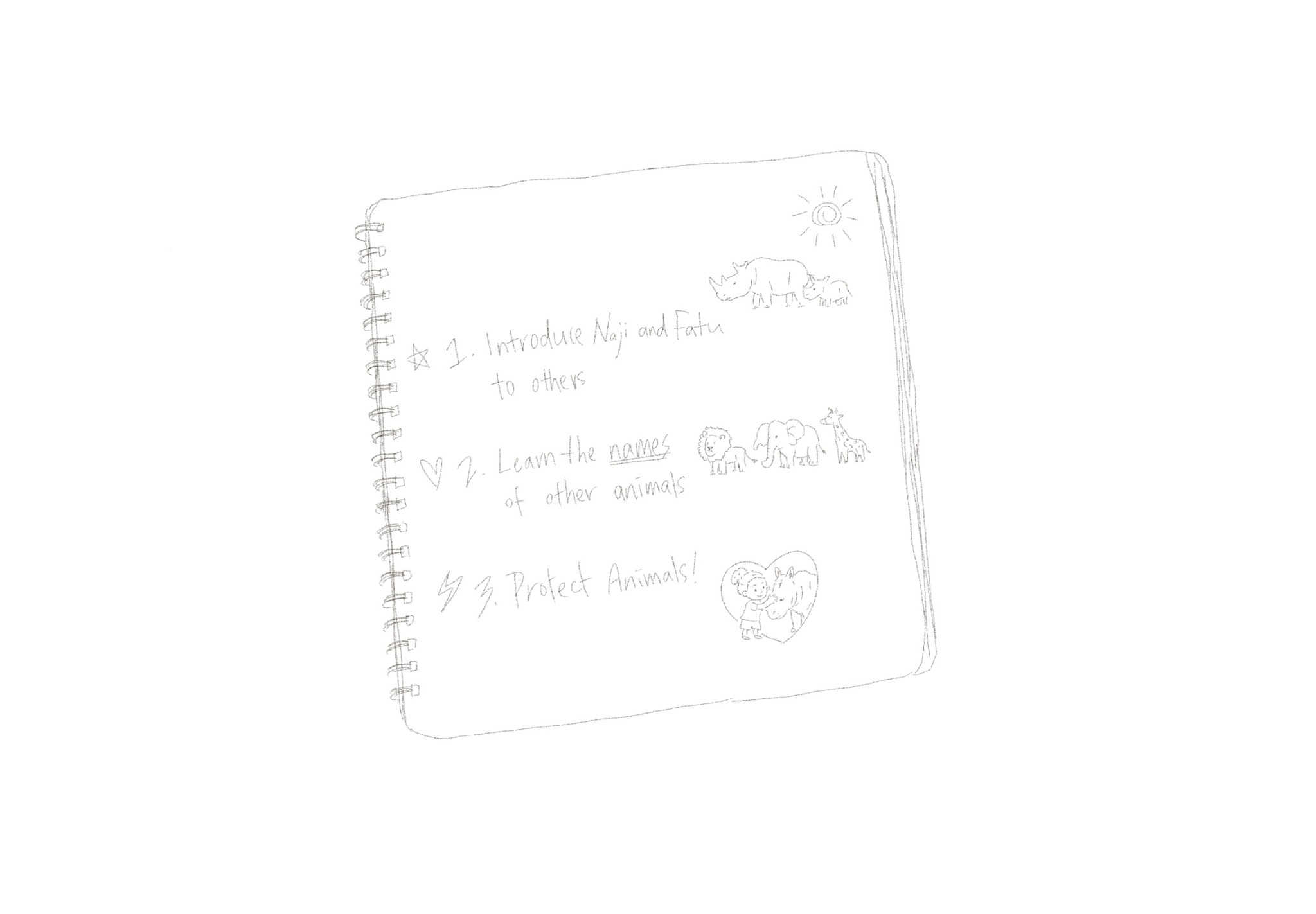
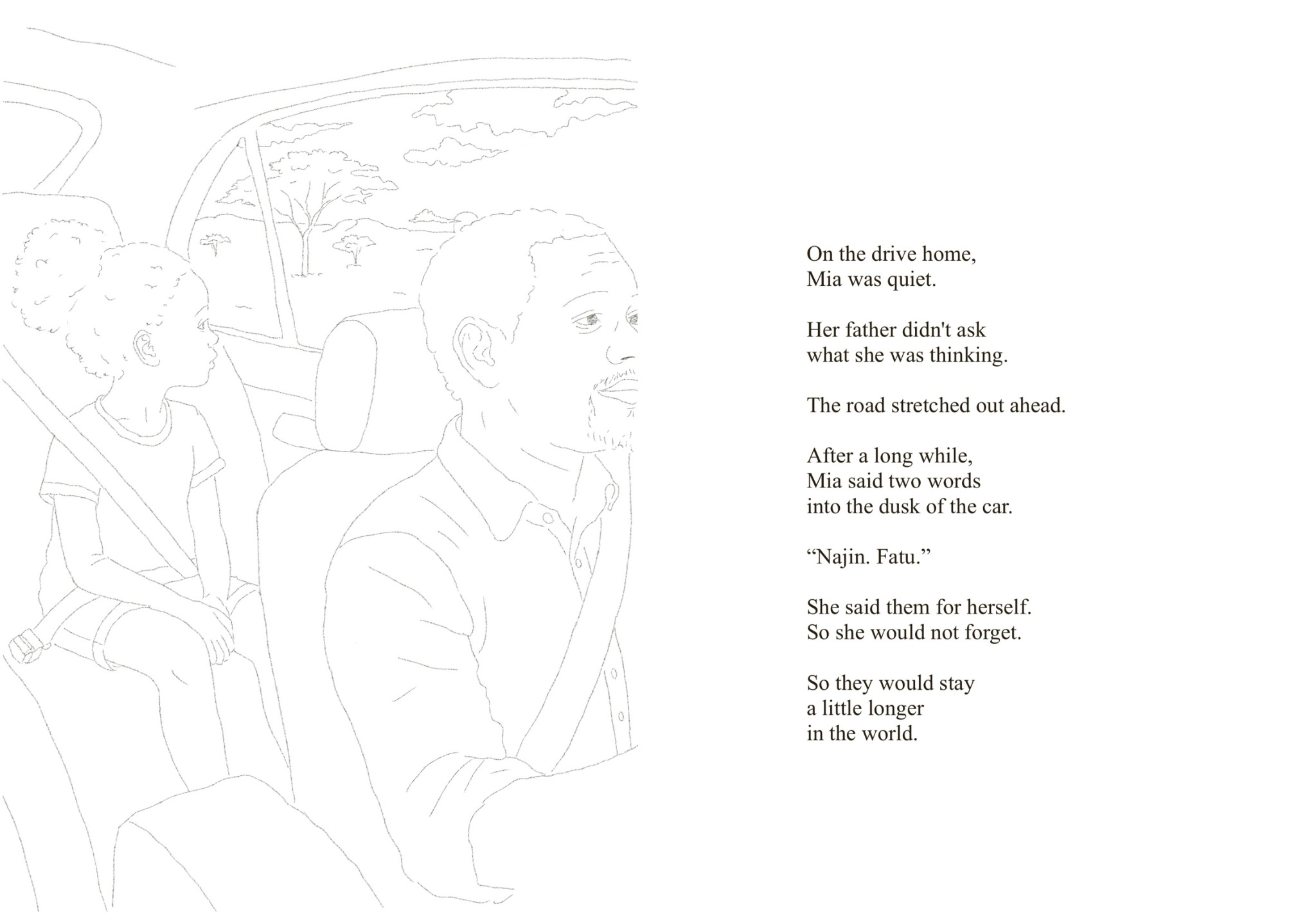
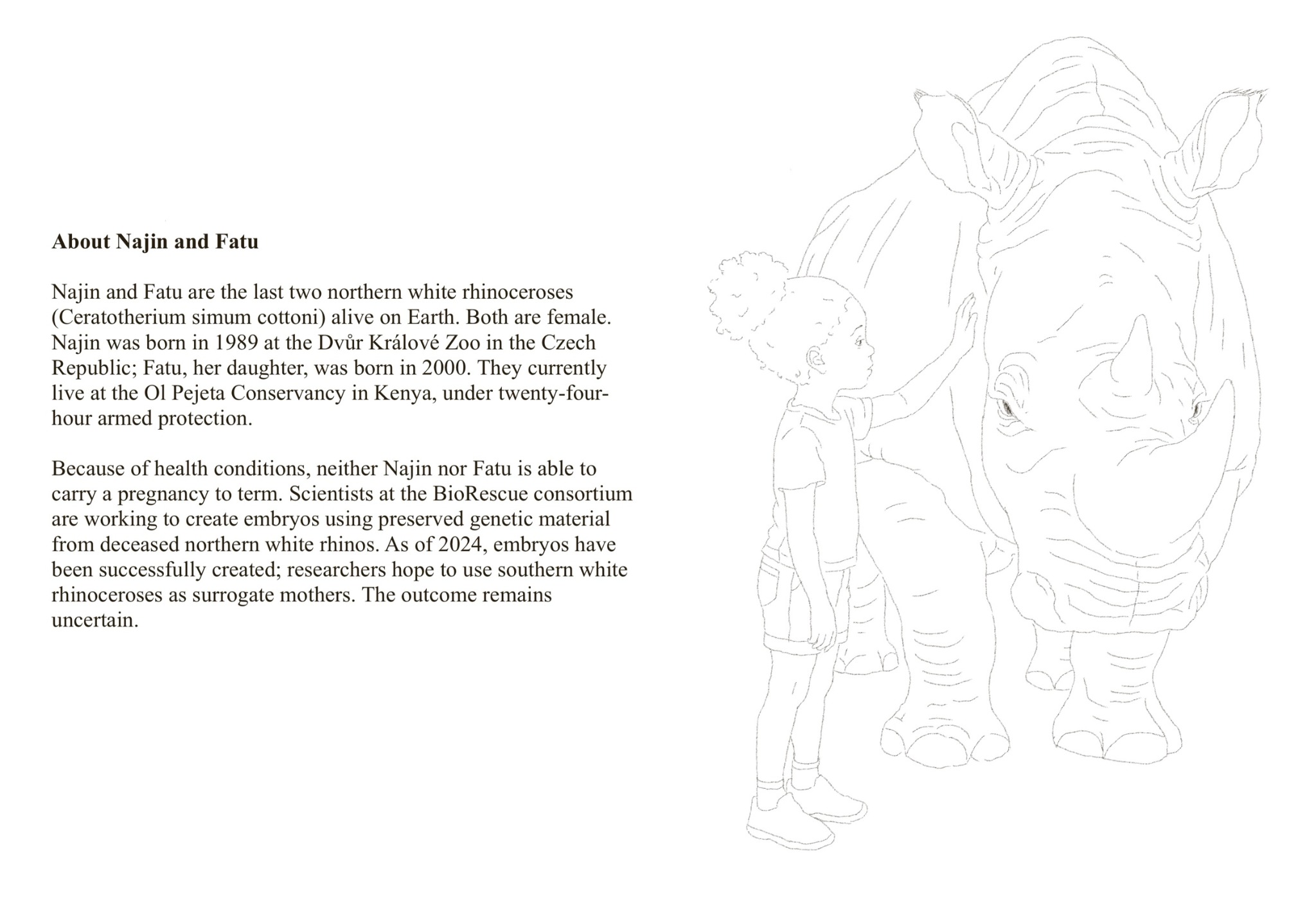
The picture book follows Mia and her father as they meet Najin and Fatu, the last two northern white rhinos. The story does not ask a child to solve extinction. It asks the child to notice, remember two names, and practice grief and care for lives they may never encounter directly.
绘本讲述Mia与父亲探访北方白犀牛Najin与Fatu的故事。它不要求孩子“解决灭绝”,而是邀请孩子注意、记住两个名字,并练习为自己可能永远无法亲眼见到的生命感到悲伤与关怀。
Care does not require direct contact. It can begin with attention, naming, and memory.关怀不以亲身接触为前提,它可以从注意、命名与记忆开始。
The complete picture book is presented as ten original high-resolution pages in the reader below.
下方阅读器按原作顺序展示完整的十张高清绘本页面。