MindSpace心灵空间
Currently reading正在浏览Project overview项目概览
← All projects全部项目
04Learning Environment Design学习环境设计

MindSpace心灵空间

A collaborative digital learning environment for middle-school mental health support, educator development, and ethically bounded AI assistance.面向中学生与教育者的数字心理支持环境,结合SEL、教师专业发展与有伦理边界的AI辅助机制。

Role我的角色
Team member; theory integration, module design, AI ethics & data literacy团队成员;理论整合、模块设计、AI伦理与数据素养
Learners目标学习者
Middle-school students, educators, and school staff初中生、教师与学校职工
Format项目形式
Student platform + educator PD ecosystem学生互动平台+教师专业发展系统
Year / Status年份 / 阶段
2025 · Collaborative prototype2025 · 合作原型
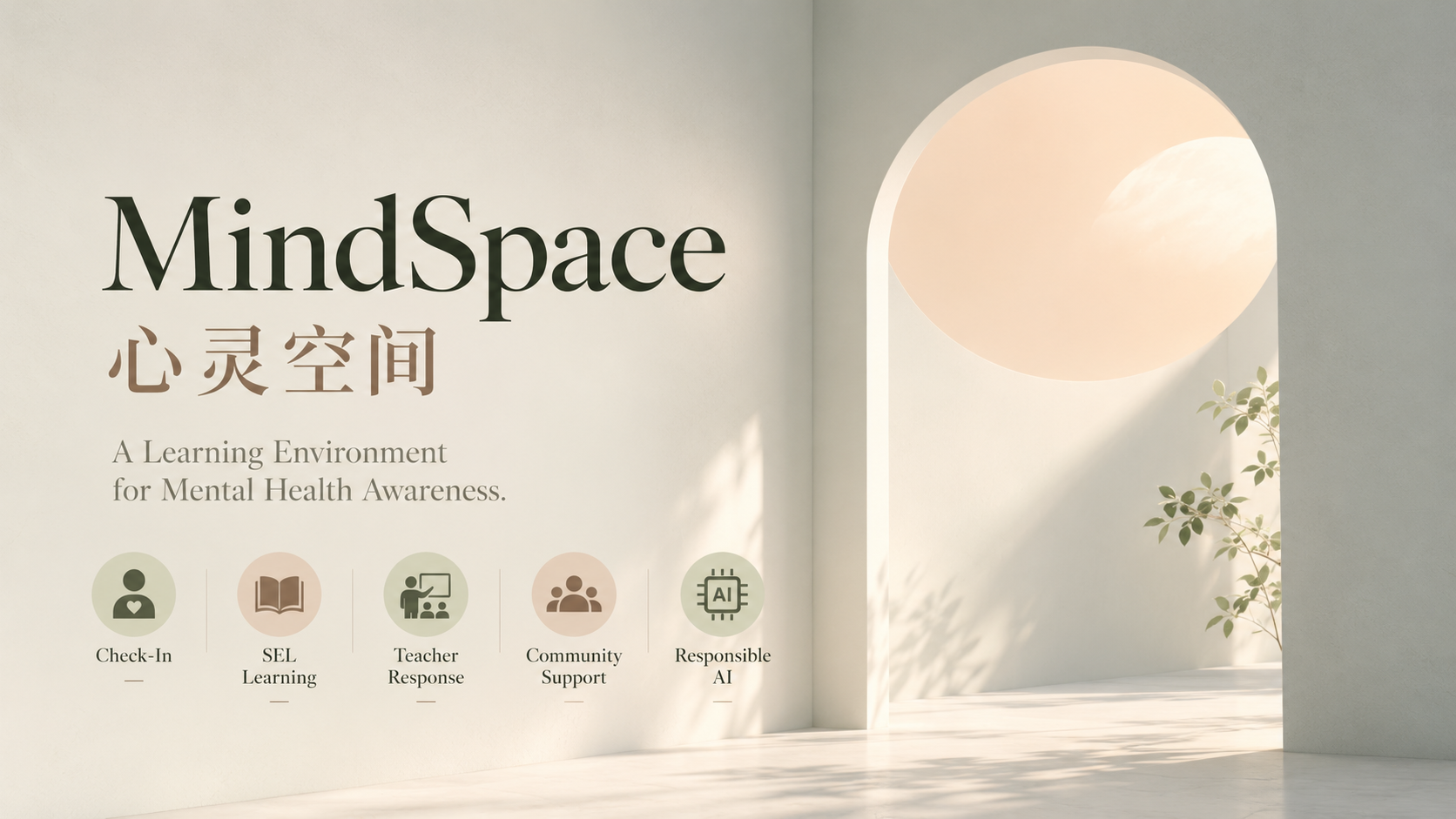
MindSpace cover: a sunlit arch, a single plant beyond the doorway, and five mental-health learning and support features.
Portfolio cover artwork · Open full size ↗作品集封面视觉 · 查看原图 ↗
Design challenge设计挑战

Mental-health needs are daily; school support is often intermittent.心理健康需求每天都在发生,学校支持却常常断断续续。

MindSpace was developed around the gap between rising emotional, social, and academic pressures in middle school and the limited counseling capacity, teacher preparation, and time available in many schools. The initial design context focused on seventh-grade learners in under-resourced Philadelphia public-school settings. MindSpace回应的是初中阶段不断上升的情绪、社交与学业压力,与许多学校有限的心理咨询资源、教师准备和时间之间的落差。项目最初以费城资源相对不足的公立学校七年级学生为设计情境。

Rather than treating mental-health awareness as a one-off lesson, the team designed a learning environment that connects self-guided student interaction, human support, educator professional development, and schoolwide routines. 团队没有把心理健康意识理解为一次性的课堂内容,而是设计一个连接学生自主互动、真人支持、教师专业发展与校园日常机制的学习环境。

MindSpace is a collaborative concept and interface prototype. The team did not conduct real-user testing or measure learning and wellbeing outcomes. MindSpace是合作完成的概念与界面原型,团队尚未开展真实用户测试,也没有测量学习或身心健康成效。
MindSpace original project artifact
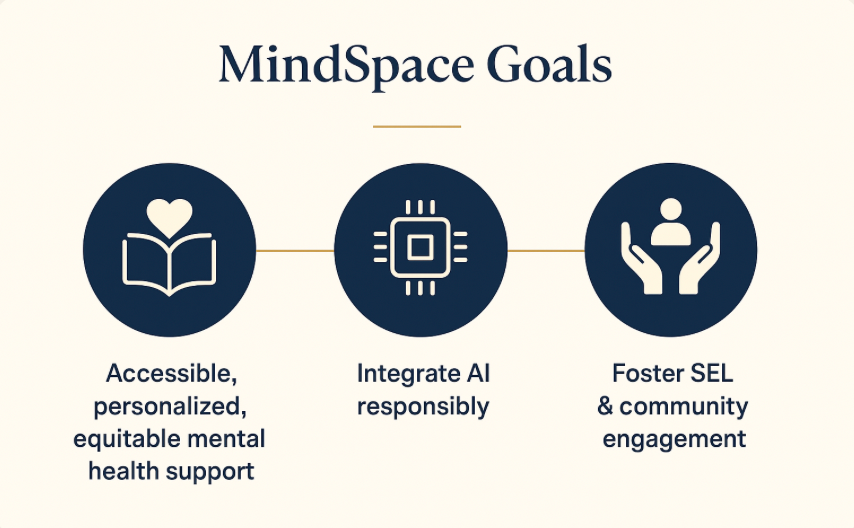
Original project goals graphic: accessible support, responsible AI, and SEL.原创项目目标图:可及的支持、负责任的AI与社会情绪学习。
Two learner pathways两条使用路径

Support students directly while strengthening the adults around them.既直接支持学生,也增强他们身边成年人的能力。

Student pathway学生端

A room that can be explored rather than a page that must be completed.不是必须完成的页面,而是一间可以探索的房间。

  • Write private reflections in a notebook.
  • Use music, drawing, and weather imagery to express a state of mind.
  • Practice grounding and self-regulation.
  • Schedule time with a counselor.
  • Release negative thoughts through symbolic interaction.
  • 在日记中记录情绪与反思。
  • 通过音乐、涂画与天气意象表达状态。
  • 练习落地与自我调节。
  • 预约心理咨询。
  • 通过象征性互动释放负面想法。
Educator pathway教师与职工端

Practice noticing, interpreting, and responding before a real crisis occurs.在真实危机发生前,练习观察、理解与回应。

  • Understand adolescent mental-health foundations.
  • Rehearse crisis response through guided simulation.
  • Build identity-affirming SEL classrooms.
  • Interpret schoolwide wellbeing data.
  • Use flexible asynchronous and synchronous professional learning.
  • 理解青少年心理健康基础。
  • 通过引导式模拟练习危机回应。
  • 建设肯定身份认同的SEL课堂。
  • 理解校园整体身心健康数据。
  • 采用灵活的异步与同步专业学习。
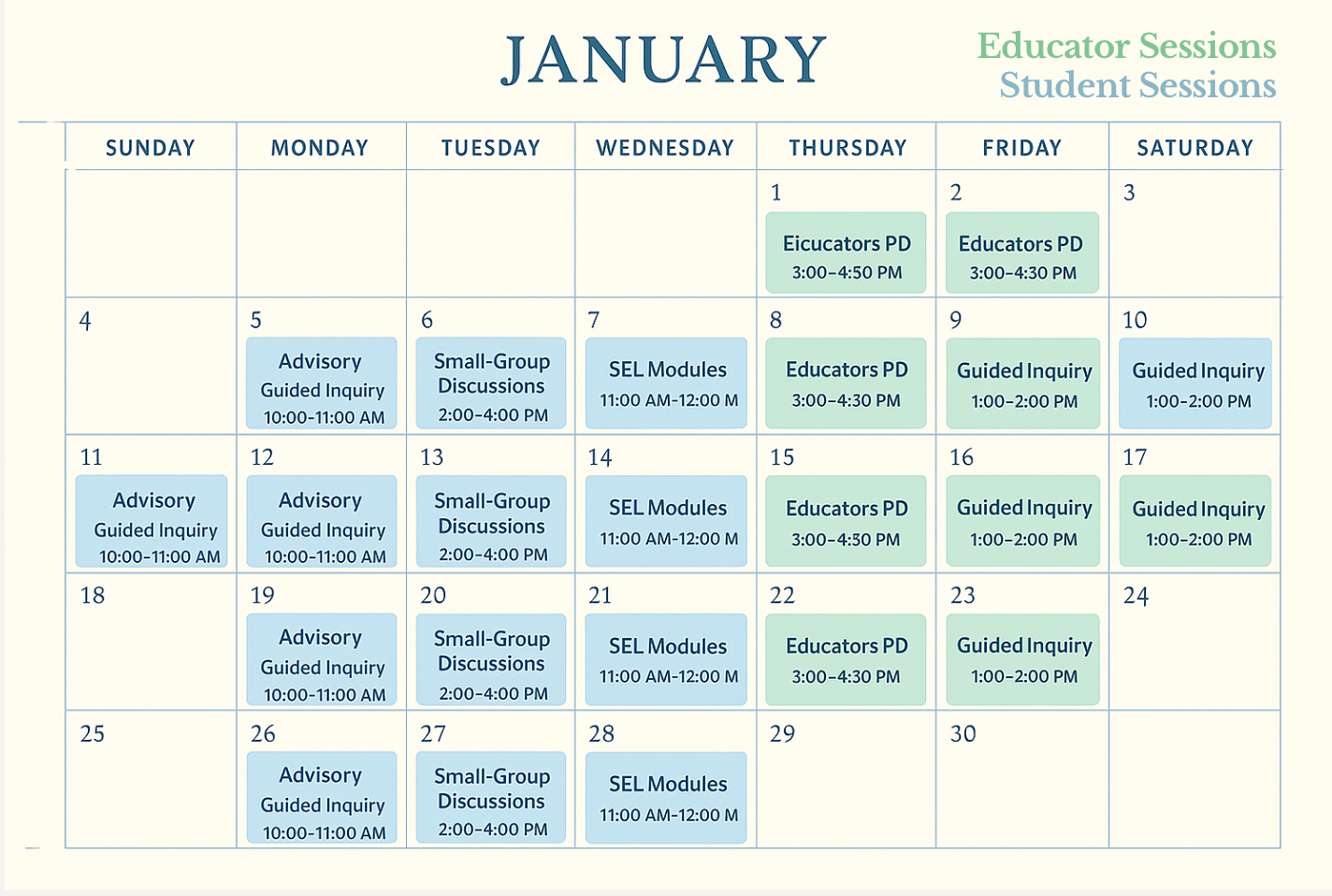
MindSpace monthly learning schedule
The proposed schedule connects advisory, student SEL modules, small-group discussion, guided inquiry, and educator professional development.项目日程将班会引导、学生SEL模块、小组讨论、探究活动与教师专业发展连接起来。
Theory into interaction理论如何进入交互

Learning theory was used to make design decisions—not added afterward.学习理论不是事后的说明,而是具体设计决策的依据。

Universal Design for Learning通用学习设计

Students can engage and express themselves through writing, drawing, music, visual scenes, or scheduling rather than one mandatory mode.学生可以通过写作、绘画、音乐、视觉场景或预约行动参与和表达,而不是被限制在单一模式中。

Multimedia Learning多媒体学习理论

Segmented content, concise text, visual signaling, and learner-controlled pacing aim to reduce unnecessary cognitive load.通过内容分段、简洁文本、视觉提示与自主节奏,减少不必要的认知负担。

Sociocultural Learning社会文化学习理论

Identity artifacts, peer dialogue, teacher guidance, and shared practices position emotional learning as social rather than purely individual.身份物件、同伴对话、教师引导与共同实践,让情绪学习成为社会性的过程,而非纯粹个人行为。

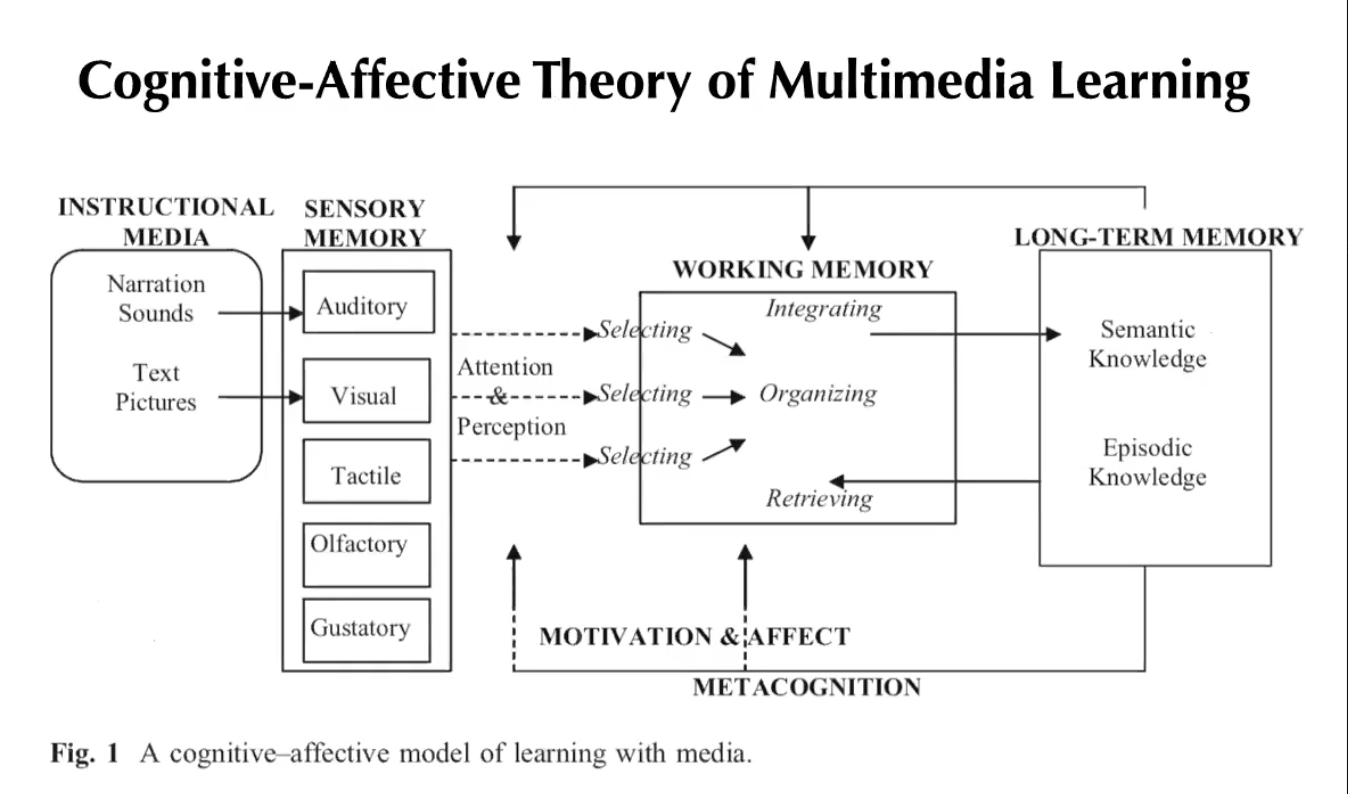
Cognitive affective multimedia learning model
A source model used to think through cognition, affect, media, and working memory.用于思考认知、情感、媒介与工作记忆关系的理论模型。
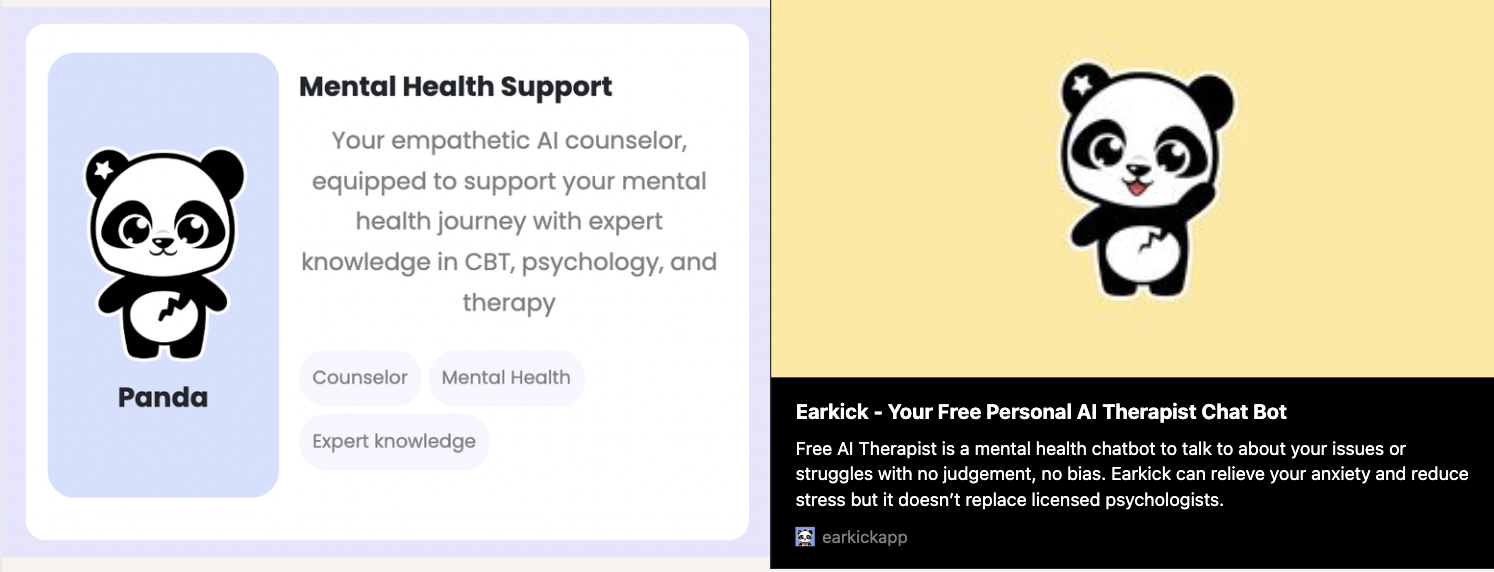
AI mental health support cards
Project research on AI-mediated support informed a more cautious design boundary.对AI心理支持产品的研究,促使团队建立更谨慎的设计边界。
Continue reading继续浏览04My focus我的重点工作
My focus我的重点工作

AI should amplify care, not claim clinical authority.AI应增强关怀能力,而不是冒充临床判断。

Responsible AI boundary负责任AI边界

Signal, scaffold, and surface patterns—never diagnose.发出风险信号、提供脚手架、呈现趋势,但不进行诊断。

My contribution focused on the ethical boundary of AI-assisted emotional-risk detection and on data literacy. In the proposed notebook, AI would flag high-risk language for trained adults, but would not determine a diagnosis or intervention. Students must be told what is monitored and why, and human judgment remains responsible for every response. 我的重点贡献是界定AI辅助情绪风险检测的伦理边界,并设计数据素养部分。在拟议的日记功能中,AI只向经过培训的成年人提示高风险语言,不作诊断,也不自动决定干预。学生必须提前知道哪些内容会被监测、为什么被监测,而所有回应仍由人承担判断责任。

Transparency透明Users know the purpose, scope, and limits of monitoring.使用者了解监测的目的、范围与限制。
Human judgment人的判断Counselors and teachers interpret signals in context.教师与咨询人员结合情境理解风险信号。
Data literacy数据素养Students and staff learn to question patterns, gaps, and unequal access.学生与教师学习质疑数据中的趋势、缺口与资源不平等。

The design also explored anonymized, aggregated schoolwide data as a learning resource. Rather than using data only to classify students, learners and educators could examine stress patterns, counselor availability, sleep, bullying, and preferred support formats to identify structural gaps and co-design responses. 项目也把匿名聚合的校园数据视为学习资源,而不仅是分类学生的工具。学生与教师可以共同观察压力趋势、咨询资源可及性、睡眠、欺凌与偏好的支持方式,识别结构性缺口并共创回应。

Continue reading继续浏览05Reflection项目反思
Reflection项目反思

Design shifted from “what should exist” to “what can meaningfully support people within real constraints.”设计从“理想中应该有什么”,转向“真实限制下什么才能有意义地支持人”。

MindSpace strengthened my ability to translate learning theory into a digital environment while keeping identity, emotion, institutional limits, and human responsibility visible. It also made the absence of user evaluation impossible to ignore. MindSpace帮助我练习把学习理论转化为数字环境,同时不让身份、情绪、制度限制与人的责任消失。它也让我更清楚地看到:缺少用户评估,是当前方案无法回避的局限。

A responsible next iteration would require collaboration with students, counselors, teachers, and privacy experts; clear consent and escalation protocols; accessibility testing; and careful evaluation of whether the environment actually supports help-seeking and learning. 负责任的下一轮迭代需要学生、心理咨询人员、教师与隐私专家共同参与,建立明确的同意与升级处理机制,进行无障碍测试,并谨慎评估平台是否真的促进求助与学习。